
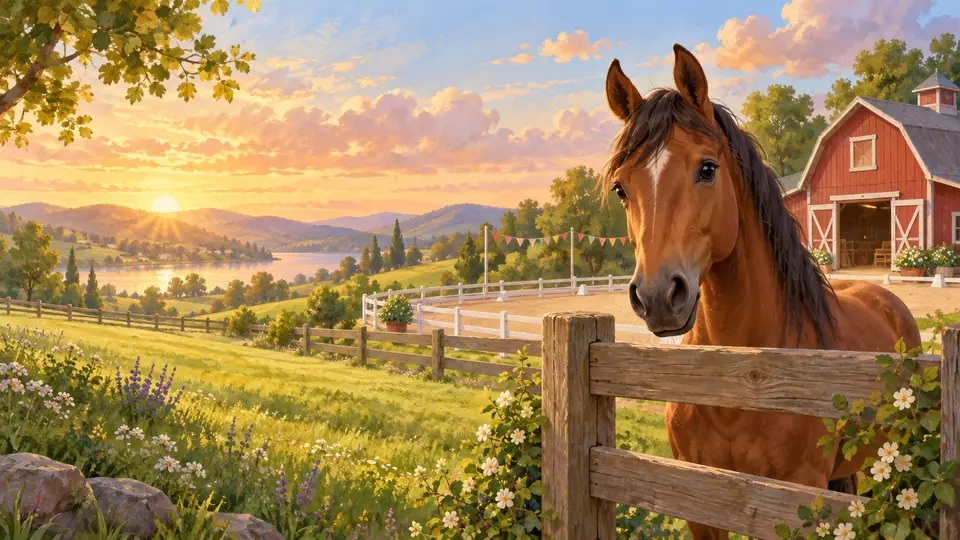
 About 7 min
Hoofprint Ranch
Care for your horse, ride together, and build a ranch that grows.

Look after your own virtual horse, set up a safe barn, and find out why a horse can nap standing up.
Free games that work on phones, tablets and computers.
About 7 minCare for your horse, ride together, and build a ranch that grows.
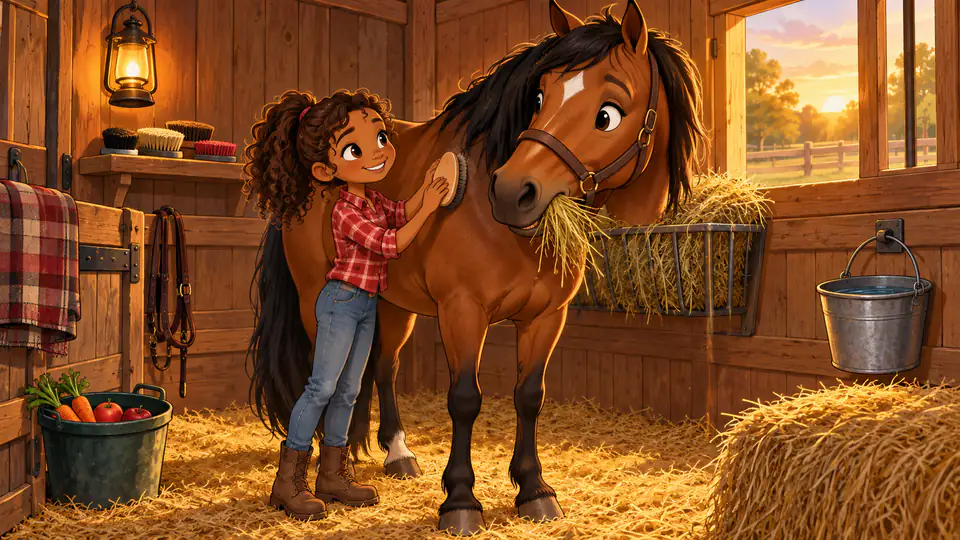 About 10 min
Feed, water and groom your own virtual horse, then earn tokens for treats.
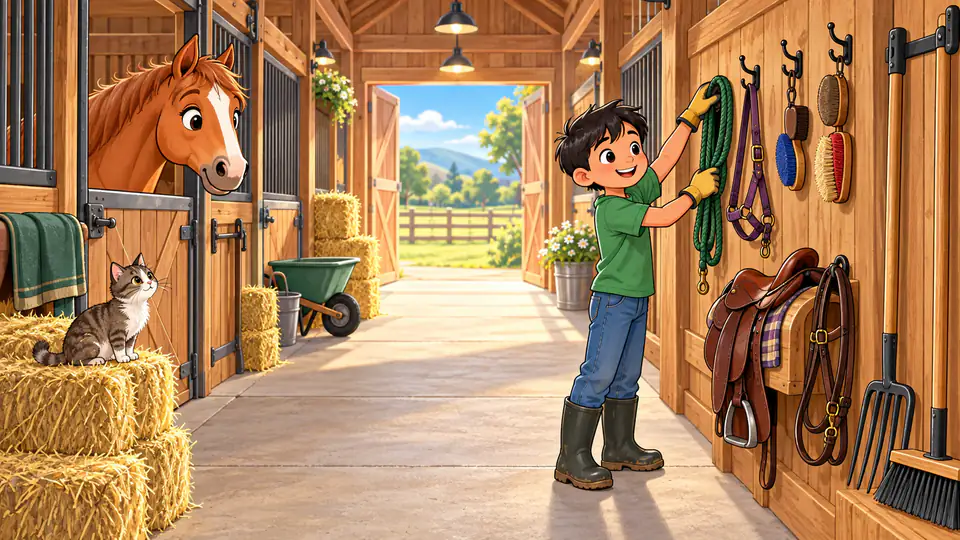 About 5 min
Drag tools and tack to the right spots and keep the walkway clear.
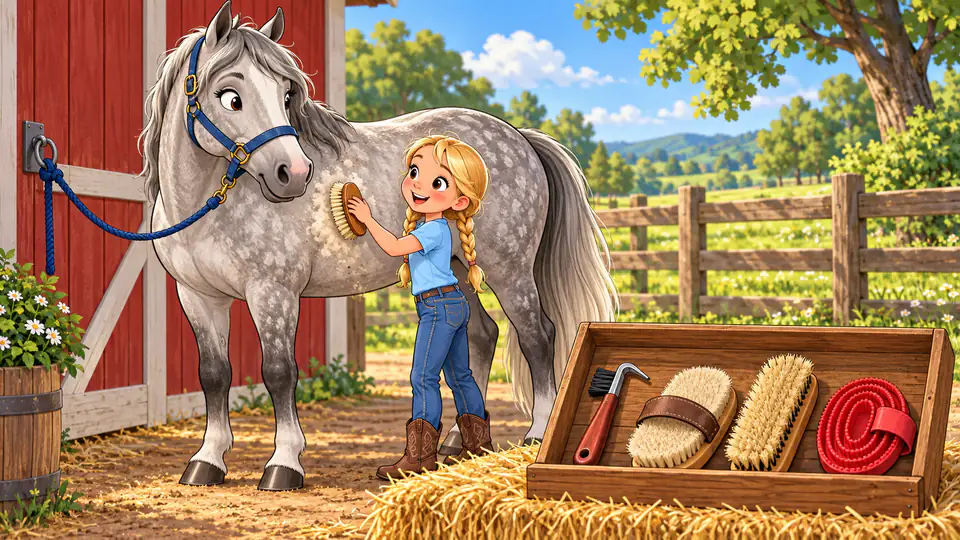 About 3 min
Which brush does which job? Match four grooming tools.
 About 2 min
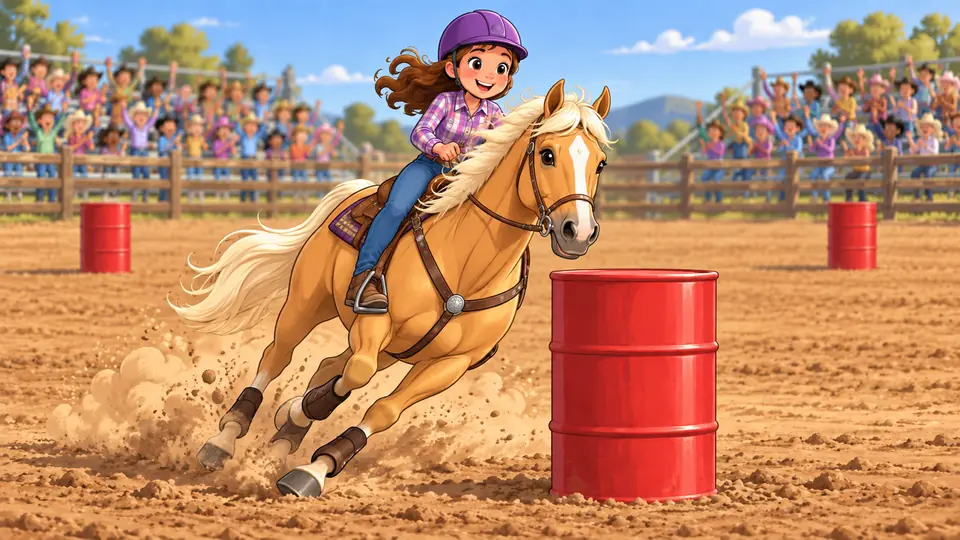
Gallop the cloverleaf around three barrels and beat the clock.
 About 5 min
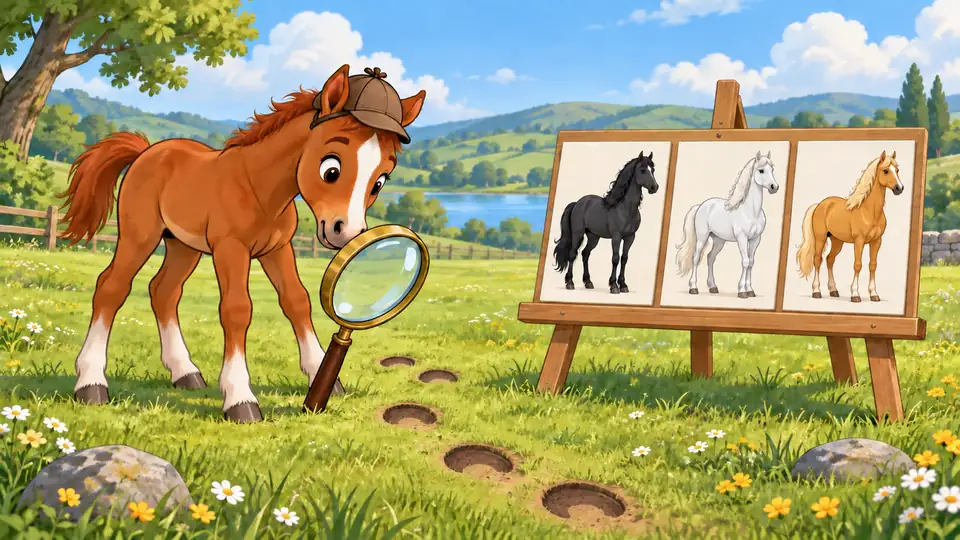
Follow the clues, name the mystery horse and collect all 18 breed cards.
Short, friendly guides for young horse fans.
Guess first, then tap a question to see the answer.
Yes! Special locking joints in their legs let them doze on their feet. For deep, dreaming sleep they still lie down, usually for short naps.
A horse’s eyes are on the sides of its head, so it sees almost all the way around. It has blind spots right in front of its nose and directly behind it. That’s why you walk up to a horse from the side.
Each ear can turn on its own to catch sounds from different directions. Ears also show feelings: pointed forward often means curious, pinned flat back can mean upset.
It’s called the flehmen response. Curling the upper lip helps a horse take a better sniff of an interesting smell.
No. Horses breathe only through their noses. That’s why their nostrils open so wide when they run.
A foal can usually stand within about an hour of being born and walk soon after, so it can keep up with its mother.
No! A baby horse is a foal. A pony is a small kind of horse, usually under 14.2 hands (about 147 cm) tall when grown up.
In hands! One hand is 4 inches (about 10 cm). You measure from the ground to the top of the withers, the bump where the neck meets the back.
Keratin, the same stuff as your fingernails. Hooves keep growing, so a farrier trims them every few weeks.
Not an animal! The frog is the rubbery, V-shaped pad under the hoof. It helps the horse grip the ground and soak up bumps.
A lot! Horses are built to eat small amounts almost all day. A horse on pasture can spend more than half the day grazing.
Usually 20 to 40 liters (about 5 to 10 gallons) a day, and even more when it’s hot or the horse is working hard.
Horses are big and easily startled. These habits keep you and the horse calm.
Our kids pages have no ads, no comments and no sign-up. Stable Pal saves progress only on the device you play on. Real riding and horse handling should always happen with a qualified instructor and a supervising adult.
Guide for grown-ups